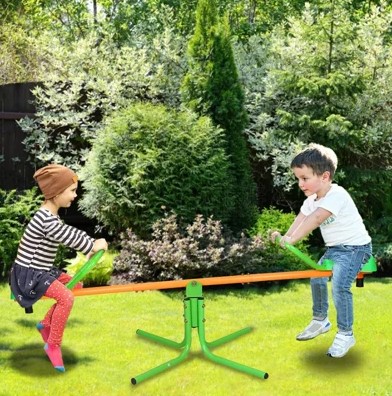
Up. Down. Repeat. Since 1900s Playgrounds.

The Teeter Totter: A Timeless Classic Your Kids Will Love

From a teeter totter indoor for toddlers to a full backyard playground set, we review, test and explain every kind of seesaw — so you can pick the right one with total confidence.

  • Independent reviews
  • Safety-first testing
  • Real parent feedback
Children playing on a classic teeter totter at a sunny playground

120+

Years of playground history

30+

Models reviewed & compared

18m–12y

Age range covered

100%

Independent — no sponsored picks

Classic steel playground teeter totter with two seats

About the classic

What Is a Teeter Totter?

A teeter totter — also called a seesaw — is one of the oldest and simplest playground apparatuses ever built: a long plank balanced on a central pivot, or fulcrum, with a seat at each end. One child pushes off the ground, rises into the air, and the other gently descends. That rhythm of up and down has entertained generations of kids for well over a century.

Beyond pure fun, the teeter totter is a working lesson in physics. It is a first-class lever, and every ride quietly teaches balance, leverage, timing and cause-and-effect. It is also one of the few playground pieces that simply cannot be enjoyed alone — cooperation is built into the design. Two riders must communicate, take turns and trust each other, which is why child-development specialists frequently recommend seesaw play for social skills.

A Short History of the Teeter Totter

Plank-and-pivot play dates back centuries in folk games around the world, including Korean neolttwigi, a standing seesaw tradition. The modern playground teeter totter appeared during the American playground movement of the early 1900s, when parks began installing steel-frame seesaws alongside swings and slides. Today's versions keep the same joyful mechanics but add modern safety engineering: enclosed pivots, spring assists, tire bumpers and low-fall designs.
Find your fit

The Main Types of Teeter Totters

Not every seesaw suits every child. Here are the four categories we review most, matched to the ages and spaces they work best in.

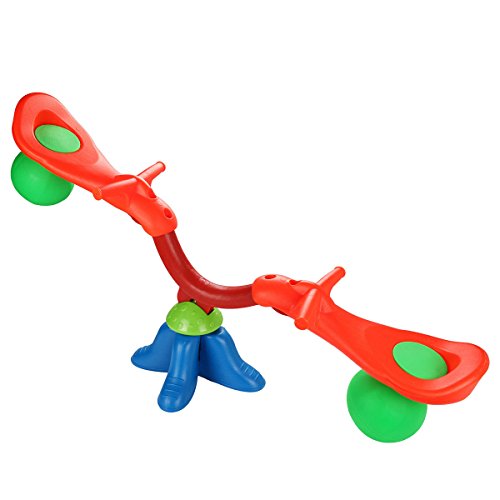
Compact plastic teeter totter indoor for toddlers

Teeter Totter Indoor for Toddlers

Compact, lightweight and made from rounded blow-molded plastic, an indoor toddler teeter totter sits just inches off the floor. High seat backs, easy-grip handles and a limited tilt angle make it a safe first ride for children from about 18 months. Most models hold 50–75 lbs per seat and work beautifully on carpet or a foam mat.

Best for: ages 18 months – 4 years · playrooms, living rooms, daycare

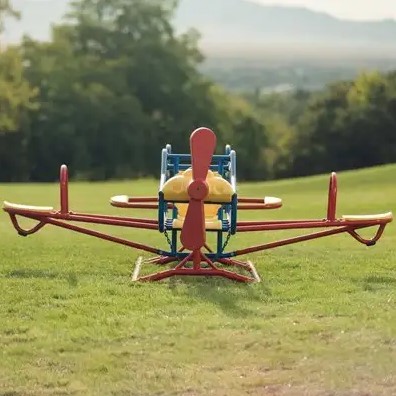
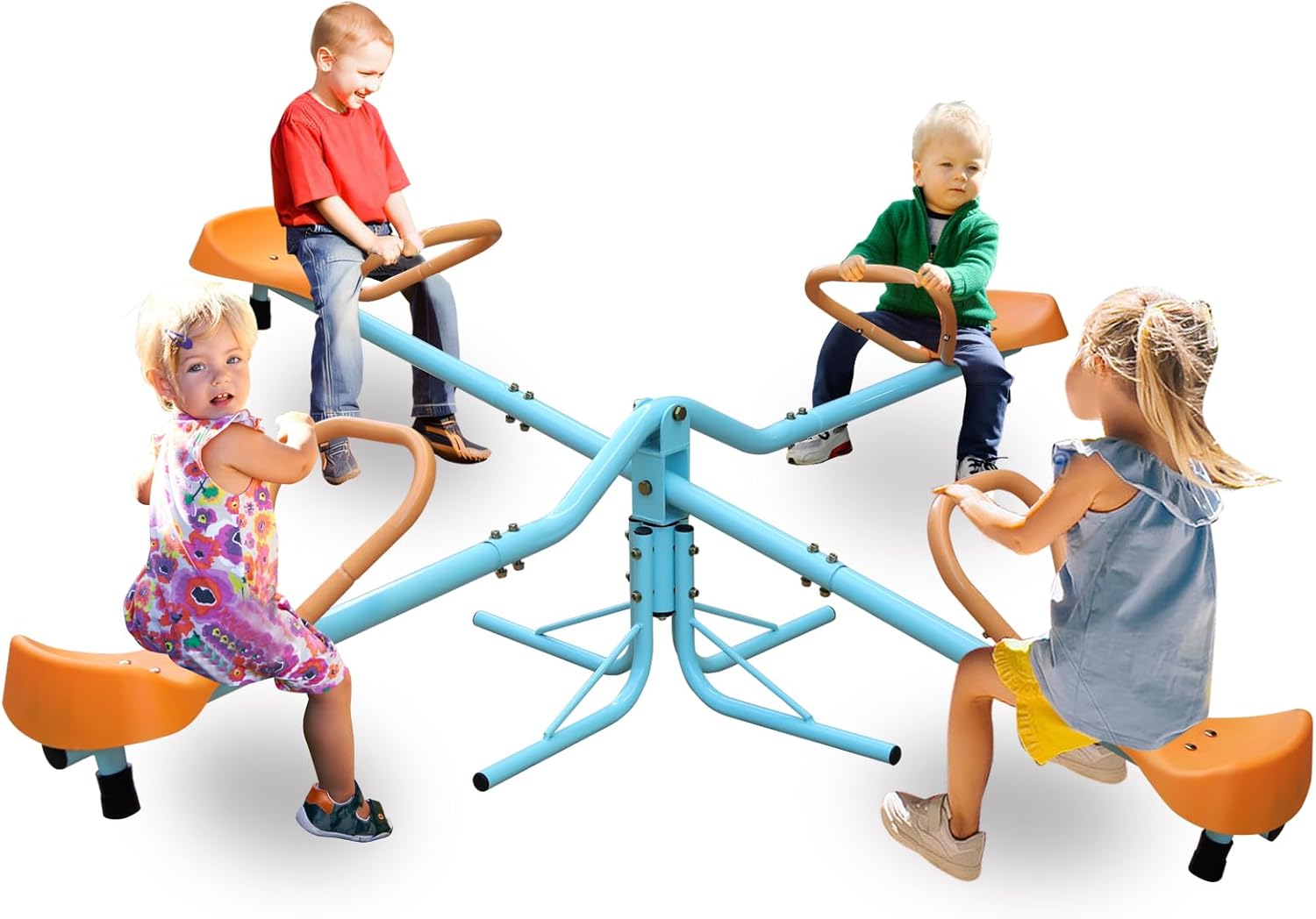
Airplane teeter totter Ace Flyer with three-seat wing design

Airplane Teeter Totter Ace Flyer

The airplane teeter totter Ace Flyer style turns the ride into pretend flight: a propeller up front, wing-shaped seats and room for two or three little pilots. The 360-degree rotating base spins as it teeters, doubling the fun while the wide stance keeps everything stable. A backyard favorite for imaginative preschoolers.

Best for: ages 3 – 8 years · backyards, patios, preschool yards

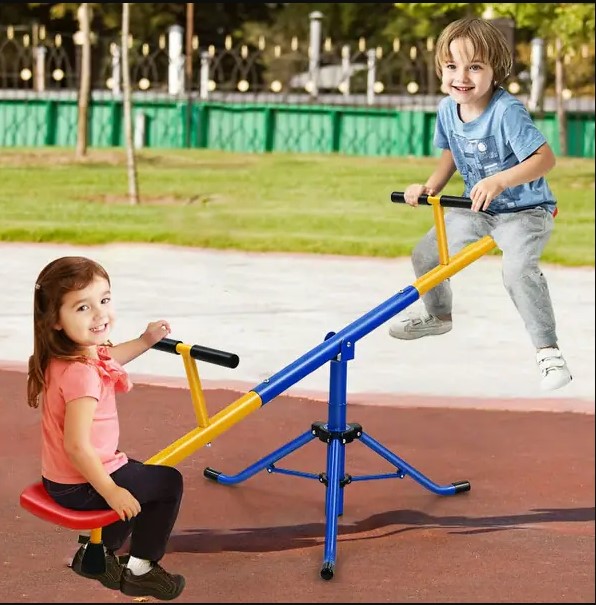
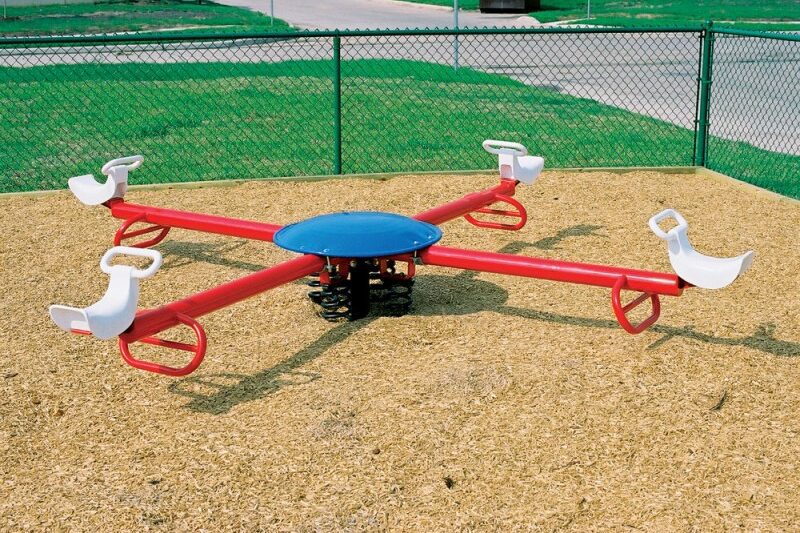
Heavy-duty steel playground teeter totters in a public park

Playground Teeter Totters

The full-size classic. Playground teeter totters use powder-coated steel frames, sealed pivot bearings and recycled-tire or spring bumpers under each seat to soften landings. Built to commercial standards, they are anchored in concrete and rated for years of daily use by school-age kids at parks, schools and community spaces.

Best for: ages 5 – 12 years · parks, schools, large backyards

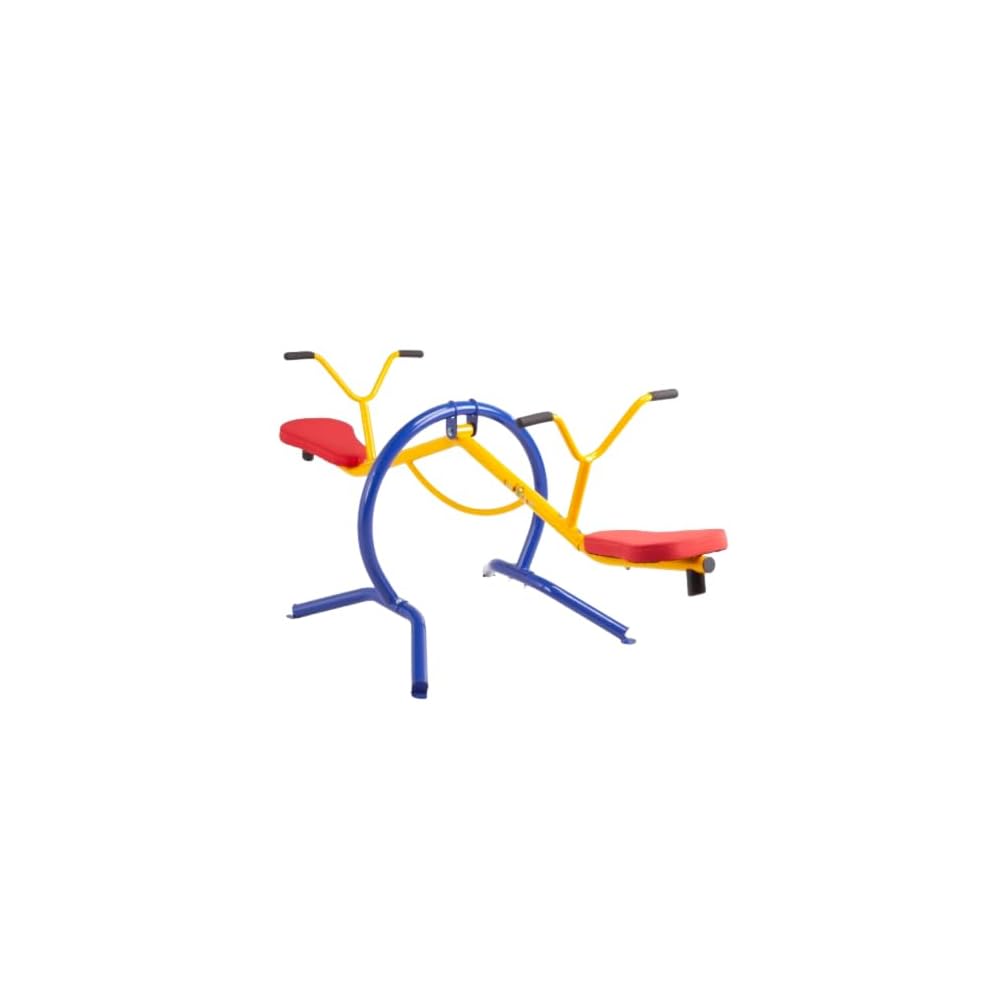
Gym Dandy teeter-totter home seesaw playground set with spinning base

Gym Dandy Teeter-Totter Home Seesaw Playground Set

A gym dandy Teeter-Totter home seesaw playground set brings park-quality construction to the backyard: a heavy-gauge steel frame, cushioned handgrips, contoured seats and, on spinning models, a smooth rotating pivot. These sets assemble in under an hour, need no concrete anchoring, and routinely support 75+ lbs per rider.

Best for: ages 3 – 10 years · home backyards, lawns

More than a ride

Why Choose a Teeter Totter for Your Kids?

Screens are easy. Balance, laughter and a partner across the plank are better. Here is what this simple apparatus actually develops.

⚖️

Builds Balance & Core Strength

Every push-off and landing engages the legs, core and posture muscles. Riders constantly adjust their center of gravity — a gentle, repeated workout for developing vestibular systems.

🤝

Teaches Cooperation

A seesaw only works with a partner. Kids learn turn-taking, communication and trust naturally, because the ride literally depends on the person at the other end.

🔬

Hands-On Physics Lesson

Levers, fulcrums, force and momentum stop being textbook words. Children discover that sliding closer to the pivot changes everything — real STEM learning through play.

🌳

Gets Kids Outdoors

A backyard teeter totter is a standing invitation to fresh air and active play. Pediatric guidelines recommend at least 60 minutes of daily activity — this makes it fun, not a chore.

💰

Affordable & Compact

Compared with swing sets and climbing frames, teeter totters cost less, need far less yard space and set up in under an hour — with no concrete pour for most home models.

🛡️

Safer Than Ever

Modern designs replace the bruise-prone planks of the past with spring-centered pivots, tire bumpers, enclosed hardware and ASTM-tested materials.

Under the paint

Build Materials & Quality Control

A teeter totter takes thousands of impacts a year. What it is made of — and how carefully it is made — decides whether it lasts one summer or a childhood.

Common Build Materials Compared

Powder-Coated Steel

The gold standard for playground teeter totters and quality home sets. Heavy-gauge tubing resists bending, while an electrostatic powder coat blocks rust and UV fading far better than spray paint. Look for 1.5"–2" tube diameter on backyard models.

HDPE & Blow-Molded Plastic

Used for toddler indoor models and seat components. High-density polyethylene is impact-resistant, splinter-free, easy to wipe clean and molded with rounded edges. Quality plastic is UV-stabilized so it will not turn brittle or chalky outdoors.

Treated Wood

The nostalgic choice. Cedar and pressure-treated pine offer classic looks and natural strength, but require annual sealing and splinter checks. Best for handy owners who enjoy upkeep.

Pivot Hardware & Bumpers

The heart of the ride. Sealed ball bearings or nylon bushings keep motion smooth and pinch-free; enclosed pivot housings keep fingers out. Recycled-tire or coil-spring bumpers under each seat absorb landing shock.

How Quality Control Works

Reputable teeter totter manufacturers follow a documented quality process. When we review a model, these are the checkpoints we verify:

  1. 1

    ASTM safety compliance

    Home models should meet ASTM F1148 (home playground equipment); public models meet ASTM F1487. Toddler toys should also pass ASTM F963 and CPSIA lead/phthalate limits.

  2. 2

    Load and fatigue testing

    Frames are stress-tested well beyond the printed weight rating, and pivots are cycled tens of thousands of times to simulate years of daily bouncing.

  3. 3

    Pinch-point and entrapment checks

    Probes verify that no gap can trap a finger, head or clothing drawstring — the failures that plagued older playground designs.

  4. 4

    Coating and weathering tests

    Salt-spray and UV chambers confirm the finish will survive rain, sun and winters without rusting, fading or leaching.

  5. 5

    Batch inspection & hardware audit

    Random units from each production run are re-measured, torque-checked and assembled to confirm the instructions, bolt count and fit are correct before shipping.

Our rule of thumb: if a listing will not name its safety standard, weight rating and frame gauge, we do not recommend it — no matter how good the photos look.

Choose with confidence

Teeter Totter Buying Guide: 7 Things to Check

1. Age & Weight Rating

Match the model to your youngest rider today and your heaviest rider two years from now. Ratings are per seat, not total.

2. Pivot Type

Spring-centered pivots auto-level and prevent hard drops — ideal for young kids. Free pivots give the classic full ride for older children.

3. Seat & Handle Design

Contoured seats, high backs for toddlers, and cushioned, weld-secured handles. Wobbly bolt-on grips are the first thing to fail.

4. Ground Clearance & Surface

Plan for grass, mulch or rubber tiles beneath — never concrete. Allow at least 6 feet of clear space around the full plank length.

5. Assembly & Anchoring

Home seesaw sets should assemble with basic tools in under an hour. Heavier spinning models benefit from ground stakes on soft lawns.

6. Weather Resistance

Powder-coated steel and UV-stabilized plastic can live outside year-round. Wood needs sealing; bare metal needs covering.

7. Warranty & Replacement Parts

A one-year warranty is the minimum we accept; strong brands offer longer coverage on frames. Just as important: can you actually order a replacement seat, bumper or bearing in three years? Brands with published parts catalogs earn extra points in our reviews, because a $12 bushing should never retire a $150 seesaw.

Play smart

Teeter Totter Safety Rules Every Family Should Know

  • Sit facing each other, both hands on the handles, feet ready to land flat — never stand on the plank or ride facing outward.

  • One rider per seat, and pair children of similar weight so neither end slams down.

  • Teach the golden rule: always warn your partner before getting off, and lower them gently first.

  • Keep hands and feet away from the pivot, and never let waiting kids stand under a raised seat.

  • Inspect monthly: tighten bolts, check bumpers, look for rust or cracks, and re-stake after heavy rain.

  • Supervise riders under 5 at all times, even on toddler-rated indoor models.

Parent supervising two children riding a backyard teeter totter safely

At a glance

Quick Comparison: Which Teeter Totter Is Right for You?

Type Ideal Ages Weight / Seat Where It Lives Typical Price
Indoor toddler seesaw 18 mo – 4 yr 50–75 lbs Playroom, daycare $40–$90
Airplane / Ace Flyer style 3 – 8 yr 75–100 lbs Backyard, patio $90–$180
Home seesaw playground set 3 – 10 yr 75–125 lbs Backyard lawn $100–$220
Commercial playground model 5 – 12 yr 150+ lbs Parks, schools $400+

From the backyard

What Parents Tell Us About Their Teeter Totters

★★★★★

"We started with an indoor toddler seesaw when my twins were two. Three years later it still gets daily use — the plastic hasn't cracked or faded once."

— Rachel M., mom of twins

★★★★★

"The airplane-style spinner was the hit of my son's fifth birthday. Three kids at once, spinning and teetering — it hasn't wobbled loose all summer."

— Devon T., backyard upgrade

★★★★½

"Assembly on our home seesaw set took 45 minutes with one wrench. The spring pivot means no slam-downs, which sold my nervous grandma instantly."

— Priya K., first-time buyer

Good questions

Teeter Totter FAQs

Indoor plastic models suit toddlers from around 18 months to 4 years. Spring-assisted backyard seesaws work best for ages 3–8, while heavy-duty steel playground teeter totters are built for roughly ages 5–12. Always confirm the per-seat weight limit on the specific model.

Yes — they are two names for the same apparatus. "Seesaw" dominates in much of the US and UK, while "teeter totter" is the traditional term in the Midwest, New England and parts of Canada. Product listings use both, so search both terms when shopping.

Yes, when you buy an age-appropriate model. A good teeter totter indoor for toddlers sits low, limits tilt angle, encloses the pivot, and adds high seat backs with grab handles. Supervise children under five, and use it on carpet, foam mats or grass.

Ratings are per seat: roughly 50–75 lbs for toddler models, 75–125 lbs for backyard sets, and 150+ lbs for commercial playground equipment. Exceeding the rating stresses the pivot first, so respect the number even if the frame looks sturdy.

Powder-coated steel and UV-stabilized HDPE models are designed to stay outdoors year-round; just tighten hardware seasonally. Wooden seesaws need annual sealing, and any model lasts longer if covered or stored during harsh winters.

Quality spinning models — including the airplane teeter totter Ace Flyer style — use a wide, weighted base engineered against tipping within the stated weight limits. Place them on level ground, keep riders seated, and stake the base on soft lawns for extra security.

Most home sets, including a gym dandy Teeter-Totter home seesaw playground set, arrive with pre-drilled steel sections and take one adult 30–60 minutes with basic hand tools. No concrete is required for residential models — just level ground and a final torque check on every bolt.

Older designs with free pivots and no bumpers caused bumps and falls, so many parks removed them in the 1990s–2000s. Modern spring-centered, bumper-equipped designs meet today's ASTM standards, which is why playground teeter totters are steadily returning to parks — and why home versions are so popular.

Ready to Bring the Playground Home?

You know the types, the materials, the safety rules and the questions to ask. All that's left is picking the teeter totter your kids will still be laughing on years from now.

Shop Now

Opens Amazon in a new tab. We may earn a commission on qualifying purchases at no cost to you.